How good are you at seeing things from different points of view? Most of us like to think we understand the world and the people in it. And to a certain degree, we probably could. But can you truly understand someone else until you’ve walked in their shoes? It’s one thing to notice similarities in another person’s circumstances, and another entirely to step into their world and experience the stakes firsthand. Perspective isn’t just about seeing a situation through someone else’s eyes – it involves understanding the details surrounding their conditions. When we see the world only one way, our moral compass is distorted, our judgement becomes misplaced, and it becomes easy to assume that what feels right or logical for us is the same for everyone else.
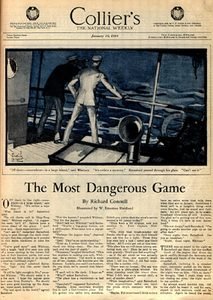
The Most Dangerous Game by Richard Connell is about a seasoned hunter named Sanger Rainsford who falls off of his yacht while travelling in the Caribbean Sea. After washing up on a remote island, he meets General Zaroff, a fellow hunter who has made the island his home. Over dinner, Rainsford learns that Zaroff finds hunting animals to be too easy, and instead hunts humans to maintain the excitement in his beloved hobby. Rainsford, his newest target, now has three days to survive as prey before he will be allowed to leave the island.
Read The Most Dangerous Game and think about the following:
Perspective
Morality under pressure
Human nature and instinct
Irony
How does Rainsford’s view of hunting and prey change once he becomes the hunted?
Do you think fear justifies actions that would normally be considered immoral? Why or why not?
What does the story suggest about the relationship between civilization and primal instinct?
Are humans naturally hunters, or is hunting more a product of culture and circumstance?
On his island, Zaroff sees no meaningful line between hunting animals and hunting humans. How does absolute power reshape one’s sense of right and wrong?
How does fear change a person’s behavior, both in the story and in real life?
Have you ever experienced a moment where fear pushed you to act in ways you normally wouldn’t? How did it feel?
Connell chose to make Rainsford a hunter first, then a hunted. How does this reversal deepen the story’s message?
How might the story have felt different if Rainsford had empathy for animals from the beginning?
When we take the time to look beyond what’s happening in our own lives, we uncover layers of complexity we might have missed. A single story can reveal entirely different truths depending on where you stand and what you’ve been through. By exploring multiple viewpoints, we challenge our assumptions, deepen our understanding, and grow in empathy. In the end, broadening our view of the world isn’t just about seeing others more clearly – it’s about seeing ourselves with greater honesty, too.
I hope this story encourages you to think beyond your own experience. I challenge you to imagine life from a different position and notice how it changes the way you see your own.
To endless interpretations!
Paige Turner
Leave a Reply