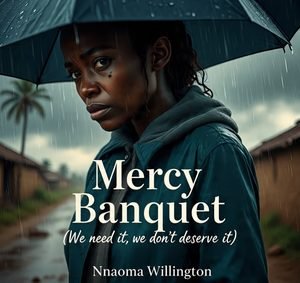
Do you believe in divine timing – the idea that everything in life unfolds exactly when it is meant to? Over the past decade, I have come to give timing a great deal of credit for many of the things that have worked out in my life. Let’s think of it as faith in timing – trusting that life is unfolding with a rhythm I may not always recognize, but can learn to believe in anyway. Some people call it coincidence, others call it chance, but for me it has always felt closer to faith. There are moments in life that make it difficult to believe things are random at all, moments where something arrives with such precision that it feels almost intentional. Looking back, I can see how often I have been met with exactly what I needed at exactly the right time, even when I was not aware I was searching for it. The most recent instance was just a month ago. Funny that it was someone on the other side of the world who was able to provide me with the right tool at the right time to put into perspective an issue that had been on my mind since the day I found out I was pregnant again.
Last month, while seven and a half months pregnant, I nervously launched my blog and started reading and reviewing indie novels. At the same time, I found myself wrestling with a difficult and unexpected form of guilt. Over the years, I have come to believe that no one is ever truly ready to become a parent. There is no such thing as being ready – only willing. You decide that you love someone enough to do your absolute best, and then you spend the rest of your life doing just that. Years after raising my first two children as a single mother, I was preparing to welcome a third child into a life filled with stability, peace, and support. Instead of feeling grateful, I found myself grieving the fact that my first two children had not always received the same version of me, or the same life, that this child would. Then Mercy Banquet found its way into my hands.
Written by Nigerian international author Nnaoma Willington (Williessence), Mercy Banquet follows the intertwined lives of Enobong and her daughter, Inyene, as they navigate the challenges, expectations, and hardships that accompany womanhood. Through third-person perspective, readers are given insight into both women’s experiences, allowing the story to unfold through the eyes of a mother shaped by sacrifice and resilience and a daughter coming of age with hope, trust, and uncertainty. As each woman faces her own struggles, the story offers a compassionate look at two women navigating different stages of life while searching for stability, purpose, and belonging. This greatly timed novel explores the complexities of family, faith, and identity while offering a deeply human portrait of two lives connected by love, circumstance, and the desire for something better.
One of the novel’s greatest strengths is its balanced portrayal of both Enobong and Inyene. Despite its relatively short length, Mercy Banquet gives readers enough time with each woman to understand her struggles, motivations, and mistakes. The narrative never feels biased toward one perspective over the other, nor does it attempt to paint either character as wholly right or wrong. Instead, it allows readers to see the world through both women’s eyes, creating a deeper sense of empathy for each of them. We see the novel’s unflinching portrayal of womanhood in Enobong’s story. Marked by hardship, betrayal, and sacrifice – from being forced to leave home at a young age to navigating the vulnerabilities that come with poverty and insecurity – her experiences reflect realities many women face but are rarely discussed with such honesty. The novel does not shy away from showing the ways women are often exploited, whether emotionally, financially, or physically. Yet through it all, Enobong’s devotion to her daughter remains unwavering, highlighting both the resilience and selflessness that often accompany motherhood. In contrast, Inyene’s perspective captures the trusting naïveté of youth. There is a tenderness to her character that feels deeply authentic, as she navigates relationships and adulthood with the hopefulness and uncertainty that often accompany young womanhood. Together, their stories create a portrait of women at different stages of life, each facing unique challenges but connected by experiences that feel, and are, painfully real. It is this emotional honesty that made the novel so compelling and memorable for me.
Nnaoma Willington describes his novel as a “faith-filled read” that “could ‘heal’ and ‘amend’ broken souls.” Mercy Banquet is full of situations where the characters have the opportunity to have faith during trying times. Throughout the novel, Enobong endures betrayal, hardship, financial insecurity, and the immense responsibility of raising a child on her own. Yet despite everything she experiences, her faith remains unwavering. She does not spend her time doubting the power of her beliefs. Instead, her faith serves as a source of strength and stability, allowing her to face each new challenge with resilience and hope. What made this aspect of the novel particularly meaningful for me was how much I saw myself in Enobong. Having spent years as a single mother working hard to provide for my children while navigating difficulties that often felt overwhelming and honestly impossible, I found Enobong’s situation to be extremely relatable. I, too, had learned to find peace not in perfect circumstances but in faith itself. The novel captures a truth that many likeminded people understand; peace is not always the absence of struggle but the confidence that you can endure it. Through Enobong’s character, Mercy Banquet portrays this theme of faith not as a solution that magically removes hardship, but as an anchor that helps a person remain steadfast through it.
I am pleased to have been able to read this book. Just over 100 pages long, it had a lot to offer packed within its pages. Despite the approachable length, as well as the amount of information and details offered, the story did not feel rushed, which is admirable as Willington was still able to make both Enobong and Inyene relatable to readers. As a fan of faith-based fiction, I greatly appreciated this perspective that offered insight into women, mothers, and an entire culture different from my own. Womanhood, motherhood, and faith are universal languages. They occur everywhere, and so should be celebrated everywhere. And so it is my belief that everywhere there are mothers and daughters and women, Mercy Banquet should be read.
I am grateful to have had the opportunity to read Mercy Banquet. At just over 100 pages, the novel packs an impressive amount of depth into a relatively short space. Despite its length, the story never feels rushed. Willington gives both Enobong and Inyene room to grow into fully realized characters, allowing readers to understand their struggles, hopes, and motivations with remarkable clarity. As a reader who enjoys faith-based fiction, I especially appreciated the novel’s thoughtful exploration of faith, motherhood, and resilience, as well as the opportunity to experience a culture different from my own. A final thing that stays with me is the realization that some experiences transcend culture altogether. Womanhood, motherhood, and faith are universal languages. They exist in every corner of the world, connecting people whose lives may otherwise look very different from our own. Through Enobong and Inyene, Mercy Banquet reminds readers of those shared experiences and the strength, sacrifice, and love that often accompany them. It is my belief that wherever there are women, mothers, daughters, and people of faith, there is an audience for this story.
May you find faith in every chapter of your life!
Paige Turner
You can read Mercy Banquet on Nigeria-based publisher platform PabPub.
Follow Nnaoma Willington (Williessence) on Facebook, Instagram, TikTok, and Whatsapp.
This book is good for:
Women (or anyone who loves the women in their life)
Fans of faith-based fiction
People who enjoy personal and emotional stories
Those looking for a short but engaging read
Leave a Reply