What is worth breaking a tradition for? Time? Money? Distance? Ranging from conflict to personal growth, there are endless reasons why strongly rooted customs end up broken. And as time goes on there will be endless more reasons. But according to some of literature’s most recognized stories the answer is far more powerful. Be it star-crossed, forbidden, or in the shape of a triangle, literature could argue very well that it is actually love that is most worth breaking a tradition for. Love. It breaks down walls and can challenge the most deeply rooted expectations.
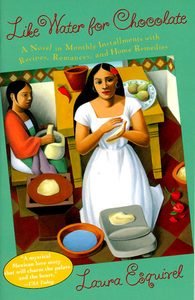
When you look at literature’s greatest love stories you can see the power it carries. It can drive a person mad as well as ground someone. It starts wars as well as ends them. It can mark the beginning of new traditions, and it can also break them. In Like Water for Chocolate (LWFC), Laura Esquivel takes this timeless struggle and stirs it into a world of magical realism, where unspoken emotions simmer beneath the surface – and sometimes boil over in extraordinary ways.
Set in early 20th-century Mexico, LWFC tells the story of Tita, a young woman bound by family tradition to remain unmarried and care for her strict mother. When she falls in love with Pedro, he marries her sister instead, forced to stay close but out of reach. Through her cooking, Tita channels her forbidden emotions, creating dishes that literally stir passion, sorrow, and desire in those who taste them. This magical tale blends love, tradition, and rebellion, exploring the power of food and the fight for freedom.
Magical realism is a style of storytelling where ordinary life and magical elements blend seamlessly, with the extraordinary treated as completely natural. Think of eating an arepa to heal a broken bone, like in Encanto, or casually aging backwards as everyone grows older, like in The Curious Case of Benjamin Button. This style allows authors to explore deep emotions, cultural truths, and complex realities in a way that feels both grounded and out of this world. It reminds readers that there is wonder hidden in the cracks of the world, and that sometimes, the most fantastical stories are rooted in the simplest human experiences.
Through the use of magical realism, Tita’s emotions take shape in her cooking, her emotional outlet. Her kitchen is transformed into a place of expression and rebellion where she is safe to literally pour her emotions into her recipes. Due to Esquivel’s writing style choice for this story, Tita’s emotions are made tangible, letting others in the story experience her longing and sorrow firsthand. Further, Esquivel starts each chapter with a special recipe, which is strategically spread out as Tita’s feelings surface and grow. The side-by-side progression of the recipe, or the preparation of it, as the story unfolds, is very symbolic. Tita’s cooking is an extension of herself. If no one can hear how she feels, then they will taste it in her food. Without this remarkable detail, would we even have a story?
Though the book could very simply be summed up as a love story, it is, at its core, one of emotional repression and the desire and fight for romantic freedom. Although love and longing are very obvious elements, it is tradition, or the desire to break it, that drives the story forward. In Tita’s case, family tradition takes the form of a strict rule enforced by her mother: as the youngest daughter, she is forbidden to marry and must remain at home to care for her. This expectation shapes every part of her life, turning what should be a natural pursuit of love into an act of rebellion. Her obedience to these rules comes at a steep emotional cost, suppressing her feelings and desires, and making even simple acts – like cooking a meal – loaded with unspoken passion and frustration.
This was a very interesting read for me, to say the least. It held my attention quite easily, which is telling as my energy levels were quite low during my post surgery stay at the hospital. Choosing to write the novel in monthly segments with their own recipe helped with the progression of the story, as time was allowed to pass without feeling rushed. The themes are tied together by a particularly striking ending, full of emotion, irony, and poetic justice. A unique and unforgettable story, I’m sure to think about it often – the way it ended, the way it felt, and the way it tasted.
May your heart stay full and your stories sweet!
Paige Turner
This book is good for:
Readers who enjoy emotionally rich stories
Fans of magical realism
Readers who enjoy sensory storytelling
Those who prefer reflective, character-driven narratives over fast-paced action
Leave a Reply