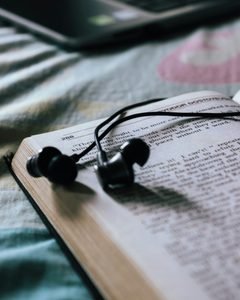
EBook or physical book? This is a common discussion in the reading community. For me, the answer has always been physical. You just can’t beat the scent of the pages of a new novel, or the feeling of turning them with your own fingers. I have previously tried using Google Books to access some classics, and while it was certainly convenient to have a library in my pocket, it was also far too easy to become distracted by other apps on my phone or tablet. So when my husband gifted me a Kindle, I figured I would struggle to get much use out of it. It was an incredibly generous gift, though, so I made a genuine effort to use it. After a couple of books, I came to an unexpected conclusion: it actually wasn’t bad at all. In fact, it was surprisingly convenient. The soft light of my Kindle Paperwhite made it easy to read in bed while my husband was asleep, and it didn’t strain my eyes the way my phone does after an evening of mindless scrolling. I tried something I didn’t think I would enjoy and ended up loving it. That’s never a bad thing.
Recently, I have been ordering a lot of office supplies and baby essentials; with that, and the thought of having Prime Video being exciting to my husband, I decided to subscribe to Amazon Prime. Upon signing up, I was given two Audible credits, and remembering my experience with ereaders, I figured I would give audiobooks the same chance. So I chose two books: one that I already love and another that had received glowing audiobook reviews. I started listening to The Virgin Suicides, a novel I immensely enjoy and think about constantly. When I first read this book it took me only a little over a day to finish, so choosing this for my first audiobook seemed like a no-brainer.
Audiobooks are a great option especially for people who enjoy reading and entertainment but don’t necessarily have the time to sit down and fully focus on a novel. The format is convenient and can be enjoyed anywhere while doing most anything. So I decided on listening to the book while using the treadmill at the gym, which takes me at least an hour and a half whenever I go. The transition from music to audiobook seemed simple enough. However, I found myself constantly rewinding, not realizing that I had completely tuned out some parts while daydreaming or watching my husband move between different machines and equipment throughout his workout. I needed a new approach to make this work.
Now knowing that I required zero distractions, listening to audiobooks at home came in the form of sitting down on my couch doing absolutely nothing. In trying this method I found myself quickly daydreaming and falling asleep. It was difficult to keep my focus without something physical to look at to ground me and keep my mind in the story. But as a fast reader, reading along didn’t work. I often found myself either tuning out the audiobook and reading ahead or becoming frustrated as I started lagging behind because the audiobook was too distracting to let me read at a comfortable and natural pace.
After a month of method juggling and only reaching the end of the second chapter, I decided to shelve the whole audiobook effort. With them being so popular, I felt like I had failed the experiment. I genuinely wanted to understand the appeal and truly believed that if I could just find the right activity to pair it with, the right narrator, or the right listening environment, everything would suddenly click. That proved difficult when I realized that part of what I love about reading is the silence.
When I read a novel, the voices belong to the characters as I imagine them and the pacing is my own. An audiobook just adds another layer between myself and the story. For many readers that layer enhances the experience, but for me it felt like a barrier. On a personal level, reading feels active in a way listening does not. When I sit down with a physical book or my Kindle, I am participating in the story. My eyes move across the page, I control the pace, and I can stop to reread a sentence or take my time appreciating a passage that stands out to me. With audiobooks, I found myself feeling disconnected from that process. Instead of becoming immersed in the story, I was constantly aware that someone was telling it to me.
My Kindle taught me that sometimes our assumptions are wrong. Because of that experience, I wanted to give audiobooks a fair chance rather than dismissing them outright. While I ultimately discovered that they are not for me, I don’t regret trying. If anything, the experience reinforced something I already knew – every reader engages with stories differently. And as frustrating as the entire process was, I cannot say that it was not a valuable experience. Sometimes you give something a fair chance and discover that it simply isn’t for you. Like genre preferences, format preferences are equally subjective. Just because I do not enjoy a story in one format does not mean the story itself is any less good. Literature is deeply personal, all aspects of it. And while it is important to try out new things, the purpose is to try them out, not to love everything that you try.
May your mind remain wide open to new things!
Paige Turner
Leave a Reply