At every point in history, timekeeping has existed. Whether by sundial, stars, seasons, or seconds, humanity’s fascination with time has remained the same. We track it. We record it. We try to delay it. And at some point in our lives, we have all wished for more of it: a few more minutes to get ready, an extra hour of sleep, or another week before a deadline arrives. But at what point does having all the time in the world become too much? In some of pop culture’s most recognizable stories about immortality, we can step back and see exactly where things begin to unravel. In Peter Pan, Peter is trapped in a permanent state of childhood, unable to mature emotionally, move forward, or truly understand love and permanence. In The Age of Adaline, Adaline is forced to watch opportunities for love, happiness, and stability come and go while her daughter continues to grow older beside her. As unlikely as it may seem, these stories are still able to put into perspective how time, or rather endless time, can eventually begin to work completely against us.
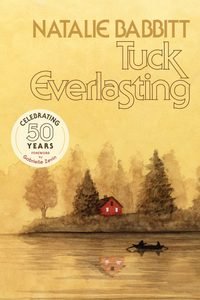
Beneath their differences in genre and storytelling, these narratives share a common thread: the idea that time is not simply something that can be escaped. It is this same idea that runs through Tuck Everlasting, a story which gently explores what it means to exist outside the natural movement of life itself. In this classic 1975 novel by Natalie Babbitt, young Winnie Foster discovers a family who has become immortal after drinking from a mysterious spring on her family’s property. When she learns the truth behind their eternal life – and the danger of that secret falling into the wrong hands – Winnie is forced to choose between living a normal mortal life or joining the Tucks in immortality.
Read Tuck Everlasting and think about the following:
Mortality as meaning (not loss)
The natural cycle of life
Time as a gift versus time lost
The ethics of immortality
What does the novel suggest we lose when life is no longer finite – and are those losses ultimately what make life meaningful in the first place?
How does Winnie’s decision reflect not just a choice between life and immortality, but a deeper understanding of what it means to truly live?
In what ways does the novel use imagery of nature (seasons, water, the wheel of life) to suggest that time is meant to move forward rather than stand still?
How does the author portray time differently for Winnie compared to the Tuck family, and what does this difference reveal about lived experience versus extended existence?
At what point in the story does immortality begin to shift from something magical into something unsettling, and how is that shift created through tone and setting?
What might the spring symbolize beyond immortality itself, and how does its presence disrupt the natural order of the world around it?
How does the idea of being “unchanged” function as both a gift and a limitation for the Tucks?
How does the gentle, almost fairytale-like tone of the novel influence the way readers initially perceive immortality versus how they interpret it by the end?
If immortality were possible in reality, what moral responsibilities would come with possessing or controlling it, as suggested by the conflict surrounding the spring?
How does the novel challenge the assumption that more time automatically equals a better life, and what alternative understanding of time does it offer instead?
Ultimately, our fascination with time reveals a quiet contradiction. We long for more of it, yet struggle to imagine what it would mean to have it without end. Stories of immortality remind us that time is not only something we measure, but something that shapes us through its limits. So, perhaps the better question is not how to have more time, but how to live with the time we already have. Because in the end, it is not something to conquer but something to live through. As the saying goes:
“Don’t watch the clock; do what it does. Keep going.”
– Sam Levenson
I hope this reflection leaves you with a deeper appreciation for the way time shapes our lives – not by how long it lasts, but by how it changes us along the way. Sometimes, it is the limits of time that make life feel most alive.
To growth and becoming!
Paige Turner
Leave a Reply